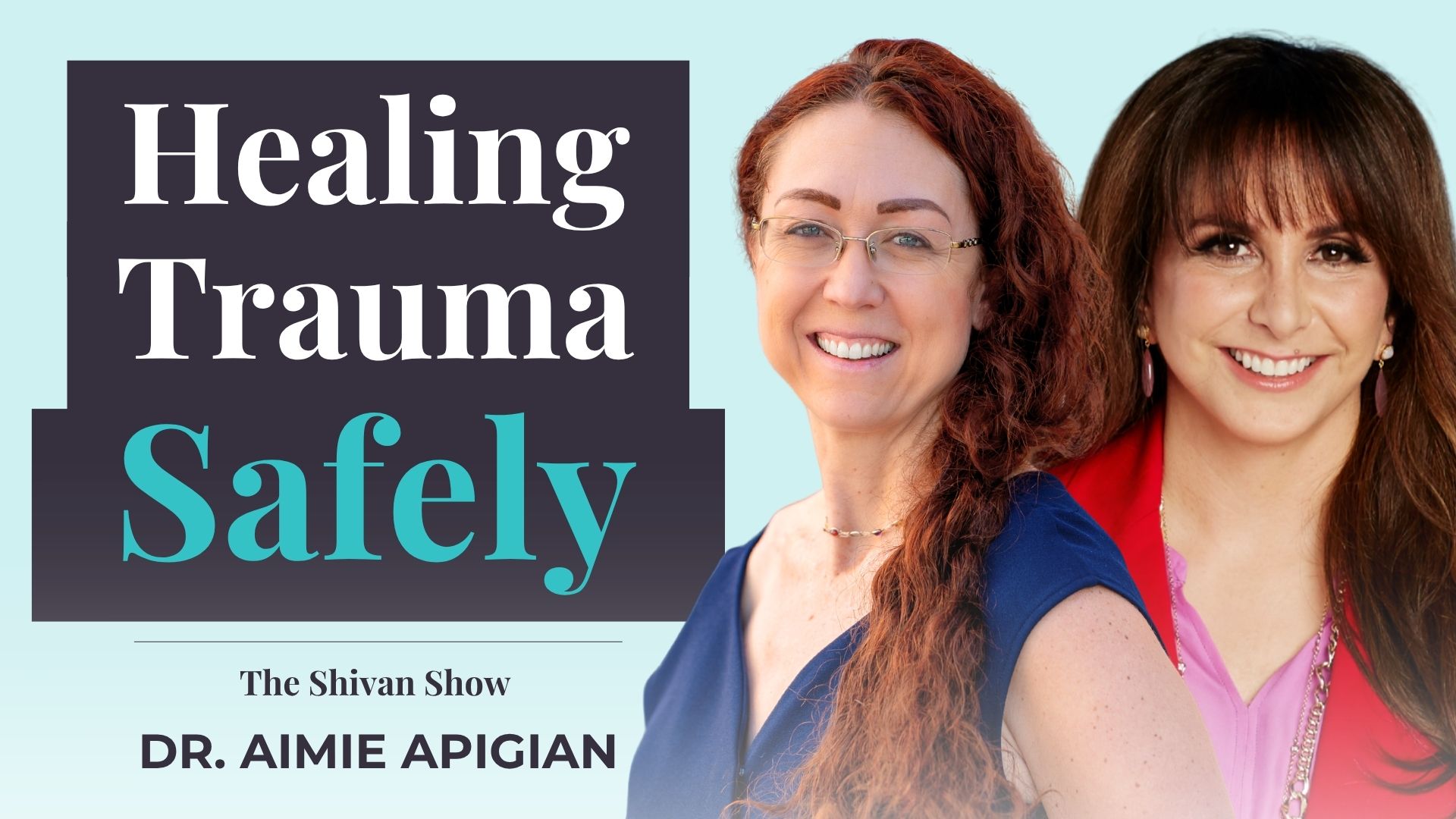
How to Heal Trauma Stored in the Body, Starting With Safety | Dr. Aimie Apigian
If you want to know how to heal trauma, why does your body keep pulling you back into the same fatigue, gut issues, relationship patterns and self sabotage, no matter how much you talk it through?
Part of the answer is that trauma can become part of your biology, stored in your body as well as your mind. That's why talking about it may only get you so far. The first step is usually making it safe enough to change.
Key Insights
- Your Cells Treat All Danger the Same
- Stress May Burn Through Your Magnesium
- Unresolved Trauma Can Look Like Perfectionism
- Survival Mode May Feed Chronic Illness
- You Don't Need Closure to Let Go
- Space Doesn't Feel Safe for Everyone
Choose Your Platform



Dr. Aimie Apigian is a preventive and addiction medicine physician, the author of The Biology of Trauma, and someone I call a friend. She's the one who helped me understand trauma in new ways.
How trauma becomes part of your biology
Most of us have thought of trauma as emotional. Dr. Apigian points out how much of it is biological.
Your body responds to danger, inside you or outside you. SIBO, other imbalances and thyroid issues can become reasons your body senses danger within itself. In her words, all danger is the same to a cell.
Her point isn't that therapy or EMDR is wrong. It's that we've been so reductionistic, sending the gut to a GI specialist and the trauma to a therapist, instead of seeing ourselves as a whole unit.
How trauma is stored in the body
Dr. Apigian works on three levels: mind, body and biology. Think of putting together a stool. If you don't put all the legs on at the same time, it's going to be lopsided.
The mind level is the beliefs about yourself that hold you back.
The body level is somatic memory, the meaning your nervous system has attached to a sensation. Lavender can mean the farm you grew up on to one person and the place they were abused to another. You can do all the mind work in the world, walk into a room that smells of lavender, and be right back in it.
The biology level is how your body has adapted to a background sense of fear and danger. She calls magnesium deficiency one of the most common deficiencies in the Western world, because every stress response burns through it. Without enough, your body may shut down and want to hibernate.
Signs of unresolved trauma in your work, relationships and health
When I first heard this, my reaction was that I didn't have any trauma. Dr. Apigian's answer is that it's a spectrum. But if it's still affecting you today, that's the problem.
She looks in three places. Your work and life: patterns of coping, pushing through, even perfectionism. Your relationships: how you communicate, how you handle conflict, what you do when you feel misunderstood. And your physical health.
In her view, all chronic illness is a degree of the nervous system being stuck in survival mode. The survival sense can feed the illness, and the illness can feed the need to stay in survival mode.
What forgiveness has to do with healing trauma
I've heard Dr. Ramani, who works on narcissistic abuse recovery, say she has no problem not forgiving her abusers. I was fascinated by that.
Dr. Apigian's definition is simple. Forgiveness is letting that person be free of the karmic entanglement with you. You don't need closure or a last conversation. It's truth and no energy.
If you still get an emotional charge when you think of them, you're still being held hostage by that person or event. And if there's a chance they'll hurt you again, you'll stay braced and guarded. Letting go has to come with making it safe for you.
Why self sabotage can feel safer than change
Dr. Vincent Felitti ran a weight loss program at a Kaiser clinic in San Diego, helping people lose over 100 pounds safely. Then he noticed his most successful patients were dropping out and regaining the weight.
Instead of criticizing them, he got curious. They told him their weight had been the solution to their real problem. Many had experienced sexual abuse in childhood. Their weight was a shield that helped them feel safe. That's where the Adverse Childhood Experiences study began.
Familiar is safe to a nervous system, even if that familiar is unhealthy. Scrolling, bingeing TV, the extra glass of wine, people pleasing. Dr. Apigian sees soothing and escaping as one of the most common patterns of stored trauma. You became this way for a very good reason, and until you understand why, the change can't feel safe.
Where to start when you want to heal trauma
Start by finding a moment to create a feeling of safety. They connect with their body and find pain, grief and sadness. We can drown in our own emotions.
Dr. Apigian found this out herself. When she started, she was jumping in and then drowning, and her fatigue, autoimmunity and gut issues got worse.
So start in the present moment. Somatic work can be as simple as a self hug, a hand over your stomach, or pushing away a pretend rock so you feel you have space to breathe. For some people, space may not feel safe. Do what feels like safety for your body.
Do 30 seconds at a time. She says that's usually safe enough that you won't fall apart. Thirty seconds becomes one minute, then two. After a couple of weeks, you might be at five minutes.
If you've been living in danger mode all day, five minutes of safety is a real shift for your nervous system, and it may start to create shifts in your biology too. You have to feel safe enough, right here, right now. There is hope, and you are not alone.
Resources
Dr. Aimie Apigian's Website
https://www.biologyoftrauma.com/Follow Dr. Apigian on Instagram
https://www.instagram.com/draimieFollow Dr. Apigian on YouTube
https://www.youtube.com/c/DrAimieApigianFollow Dr. Apigian on Facebook
https://www.facebook.com/draimie/Connect with Dr. Apigian on LinkedIn
https://www.linkedin.com/in/dr-aimie-apigianFree SIBO Webinar with Shivan Sarna and Dr. Allison Siebecker
Join the current free live webinar on understanding where you are with SIBO and how to think about what comes next.
https://sibosos.com/podcast-nextSIBO Navigator
A four-month SIBO education and navigation program with Dr. Allison Siebecker and Shivan Sarna. Includes the SIBO Recovery Roadmap® course, the SIBO Algorithm, a masterclass library, AI search tools, and eight live Q&A sessions over four months.
https://sibosos.com/podcast-sibonavigatorDr. Allison Siebecker's Fullscript Dispensary
Shop over 15,000 practitioner-grade supplements, explore Dr. Siebecker's curated wellness plans, and enjoy exclusive pricing.
https://sibosos.com/podcast-fullscriptSIBO SOS
Looking for answers to bloating, IBS, constipation, diarrhea, or SIBO? Explore free resources, expert interviews, educational courses, coaching programs, and trusted recommendations to support your gut health journey.
https://sibosos.com/podcast-sibososMicrobiome Labs, home of MegaSporeBiotic™
Use code NOBLOAT15 to save.
https://sibosos.com/podcast-microbiomelabsPureO3 - Ozone at home and ozone beauty products
Use code 7SS to save.
https://sibosos.com/podcast-promolifeThe Women’s Health Rescue Summit
https://sibosos.com/podcast-whrsThe New Science & Wisdom of Menopause Summit
https://sibosos.com/podcast-menopause-summitLymphatic SOS & Rescue Summit
https://sibosos.com/podcast-lymphsummitWhole Body Dental Rescue Summit
https://sibosos.com/podcast-whole-dentalThe Gut Rescue Summit
https://sibosos.com/podcast-gut-rescueFollow Shivan on Instagram
https://www.instagram.com/shivansarnaofficial/This episode is for general information only and is not medical advice. Nothing here is intended to diagnose, treat, cure or prevent any condition. Talk to your doctor before making changes to your care.